

Governments that deploy internet shutdowns to thwart protesters have struggled to clamp down on offline messaging apps. India’s recent response to Jack Dorsey’s Bitchat suggests that battle is entering a new phase.
Bitchat, launched by the Twitter co-founder in 2025, allows nearby phones to communicate over Bluetooth even when mobile networks or internet access are unavailable. Last month, the app had its biggest real-world test after authorities shut down internet access during student protests in New Delhi.
As protesters turned to Bitchat, the Indian government tried to block access to the app’s source code on GitHub, a Microsoft-owned platform that allows developers to create, store, manage, and share their code. In the past, the Indian government has blocked apps from official app stores due to various reasons, but digital rights advocates say this appears to be the first known attempt to geoblock an open-source software repository.
The episode highlights a growing challenge for governments.
The episode highlights a growing challenge for fascist, antidemocratic governments.
F-Droid users can use Briar, which among other allows chat over Bluetooth (no Internet required).
I frankly think there should be something like a Bluetooth-based protocol allowing for every messaging app to exchange messages, much like #XMPP. Then, even if you block one app, there will be others available that anyone can use with the people that managed to install that blocked app in the 1st place.
You can still create open hotspots and have those services running on a server if you wanted. It doesn’t need to be connected to the internet.
Anyone please correct me if I am wrong.
Yeah, xmpp is a great protocol, but everyone needs to be in the vicinity of the server. A mesh network (p2p) where every client also relays messages for other clients is better suited for this usecase. I think meshtastic is an open standard for this. Briar is a valid alternative that works with phones, which most people already own. Not the greatest idea to bring those to protests, though because of network surveillance attacks by police forces. A meshtastic device would solve this problem.
meshtastic very quickly runs into problems with congestion. at around 100 users in a local mesh it becomes super unreliable and in urban areas it is really hard to use. meshcore (a separate network) tries to fix some of that, but is still tied to lora devices and super low bandwidth.
reticulum is not as mature yet, but its protocol is completely transport agnostic, meaning you can mesh almost anything from bluetooth and local wifi to lora, fibreoptic cables, packet radio and telegraph lines. and most importantly: it is a whole new networking stack, not just a single app like meshtastic/meshcore
Yeah, xmpp is a great protocol, but everyone needs to be in the vicinity of the server
I’m also thinking about the possibility of blocking/hijacking the network by the law enforcement forces. If every device is also a node connecting to each other, they can be more hardly taken down I think.
meshtastic
I’m not so familiar with meshtastic, but wouldn’t be more helpful to have something that actually runs on people’s phones instead of having a separate device? I mean, as you said, everyone has phones, and with something like the Ripple app (or any other panic button app) you could hide the app or clear its data (or you could do it manually). With meshtastic, in the event of a search, I think you would be more suspicious, I think.
I’m not that knowledgeable about this stuff but I think meshtastic would have better range due to running over lora. That’s the whole reason you need a separate radio for the communication to a node. Also the nodes require very little power. You can set up one with a small solar cell for cheap and just leave it somewhere. Black Flag Civilian and Benn Jordan both have plans to make your own nodes. There are plenty of others out there.
This is the real reason Google is locking down Android. Either this was always the goal, or they are aware of this consequence and think it’s a good thing.
How does Meshtastic relate?
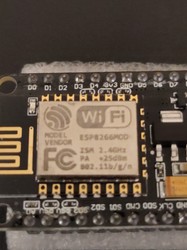
Meshtastic (and Meshcore) use LoRa radios so require extra hardware, but as a result have much longer range than Bluetooth.
As someone that has used both for years:
- meshtastic - great at imprompu connections. Camping, big events, ect. Like within 5 milesish.
- meshcore - great at consistant communication with known nodes. Think your house, office, or established areas. Getting messages out of your local city is possible.
Its fun as a hobby.
I want to like it, but
- the learning curve
- the extra hardware requirements
- the state of the software ecosystem
- the (lack of) reliability in my experience
- schisms with even choosing how to communicate
all make it feel to me like a project for comfortable hobbyists at hackathons, not a serious protest communication tool.
It would be nice if these mesh projects worked together. There are at least three major incompatible LoRa mesh ecosystems. I think only Reticulum has both LoRa and Bluetooth, but Reticulum is possibly the least mature, and it’s even more obscure than Meshtastic. A few phones with Reticulum over LoRa could relay messages from Reticulum over Bluetooth phones over a longer distance, and potentially reach the internet from some distant location.
Columba looks like the app you’d want. I’ve never used it.
Thank you so much for the Columba recommendation! I played around with it enough to connect two devices over Bluetooth LE, and I assume if I had the extra hardware, I’d be able to use a LoRa radio with it too (looks like the option to flash it is simply built into the app).
I might need to look into the privacy implications of turning on a Bluetooth radio at a local event when a lot of recommendations say you should leave your phone at home, but this at least seems promising if somebody had a second device specifically for these things.